
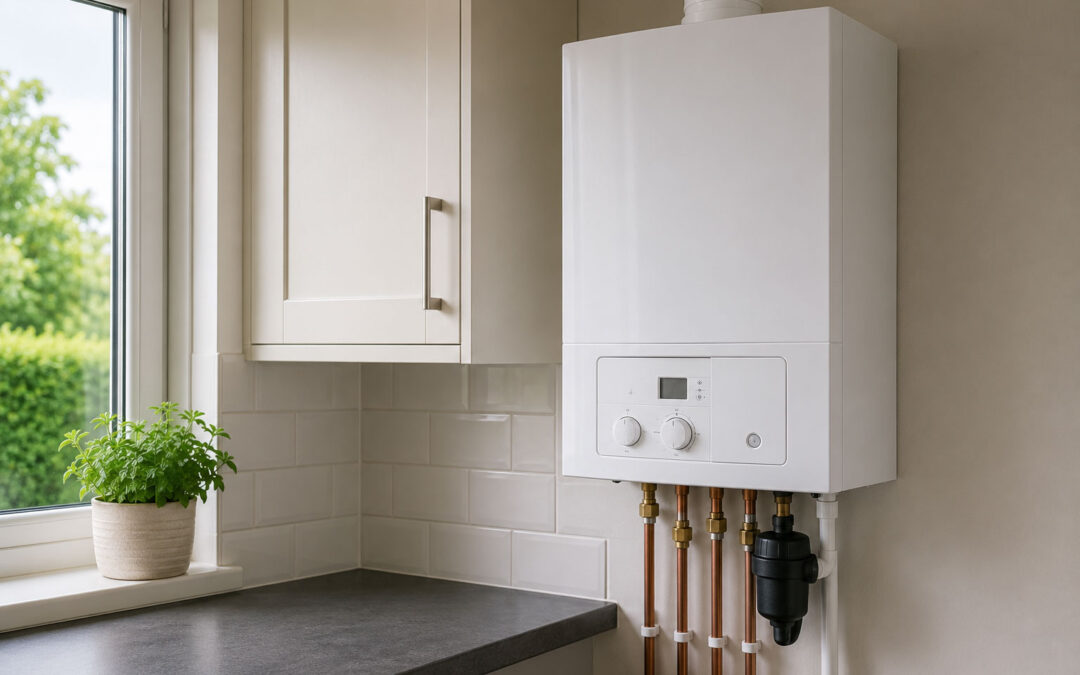
Boilers are used less heavily during summer, but that does not mean faults disappear. Hot water is still needed every day, and periods of reduced heating use can sometimes reveal problems that have been developing unnoticed.
A boiler that appears to be working normally may begin losing pressure, displaying fault codes or failing to provide consistent hot water. Dealing with these issues during summer can prevent a more serious breakdown once colder weather returns.
Loss of boiler pressure
Low pressure is one of the most common boiler problems. Most sealed heating systems should usually operate within the pressure range shown in the boiler manufacturer’s instructions.
A gradual pressure drop can be caused by:
- A small leak within the heating system
- A faulty pressure relief valve
- A problem with the expansion vessel
- Recently bled radiators
- A fault inside the boiler
Repressurising the system may restore operation temporarily, but repeated pressure loss should be investigated. Continually topping up the boiler without identifying the cause can allow the underlying problem to worsen.
No hot water
A boiler may still provide heating but fail to produce hot water, or the hot water may become intermittent.
Possible causes include:
- A faulty diverter valve
- Problems with the thermostat or temperature sensor
- Low system pressure
- A boiler control fault
- Restricted water flow
- A problem with the hot water cylinder on a system boiler
Hot water faults can be particularly noticeable during summer because the central heating is used less often. A Gas Safe registered engineer can diagnose whether the problem is within the boiler, its controls or another part of the system.
Boiler not firing
A boiler that does not fire may show a fault code or warning light. In some cases, it may attempt to start and then shut down again.
This can be caused by:
- Ignition problems
- Low gas pressure
- A faulty sensor
- Condensate issues
- Low water pressure
- A problem with the boiler’s internal controls
The boiler should not be repeatedly reset without checking the manufacturer’s instructions. If the fault returns, the cause needs to be diagnosed correctly.
Unusual noises
Boilers and heating systems naturally make some sound while operating, but new or unusually loud noises can indicate a problem.
Banging, rattling, whistling or gurgling may be linked to:
- Air in the system
- Scale or sludge
- Pump problems
- Restricted water circulation
- Loose internal components
- Excessive system pressure
Noise alone does not always indicate a serious fault, but it should not be ignored if it is becoming louder or is accompanied by poor performance.
Leaks around the boiler
Water beneath or around a boiler should be investigated promptly. The cause may be a loose connection, a worn seal, excessive pressure or a faulty internal component.
Water can damage nearby surfaces and may reach electrical parts inside the boiler. Avoid removing the boiler casing or attempting an internal repair. Boiler repairs involving gas appliances must be completed by a suitably qualified Gas Safe registered engineer.
Fault codes and warning messages
Modern boilers use fault codes to identify where a problem may have developed. These codes are helpful, but they do not always confirm the precise cause.
A fault code relating to ignition, pressure or circulation may be triggered by several different components. Replacing parts based on the code alone can lead to unnecessary work. Proper testing is still required before a repair is agreed.
Keep a note of the code displayed and provide it when arranging a boiler repair in York. This can help the engineer understand the reported symptoms before attending.
Heating not working after summer
Some boiler and heating faults only become apparent when the central heating is switched on again after several months.
Common problems include:
- Radiators remaining cold
- Thermostats not responding
- Seized radiator valves
- Circulation pump faults
- Air within the system
- Boiler pressure dropping when heating starts
Testing the heating briefly before autumn gives more time to arrange any necessary work before demand for heating repairs increases.
Reduced boiler use can still reveal faults
During summer, boilers often operate mainly for hot water. Components such as pumps, valves and controls may move less frequently than they do during winter.
A component that is worn or beginning to seize may work intermittently before failing completely. This is one reason a boiler can appear fine during warm weather and then develop a fault when the heating is turned back on.
Boiler servicing during summer
Summer can be a practical time to arrange boiler servicing in York. Engineers are often less heavily booked than during autumn and winter, and faults can be identified before the boiler is needed every day.
A boiler service includes safety and operational checks, but it is not the same as a repair. Any existing faults or replacement parts should be discussed separately.
Repairing or replacing an older boiler
A repair may be appropriate when the boiler is otherwise in reasonable condition and parts remain available. A boiler replacement may need to be considered when the boiler:
- Breaks down repeatedly
- Requires increasingly expensive repairs
- Has obsolete or difficult-to-source parts
- No longer meets the household’s heating and hot water needs
Where repair is no longer economical, Simtec can explain the available options for boiler installations in York.
For boiler faults, pressure loss, leaks, warning codes or hot water problems, contact Simtec Heating on 01904 412109.