
Common Causes and What to Do
If you’ve noticed that your boiler pressure keeps falling, you’re not alone. It’s one of the most common issues homeowners experience, particularly during the colder months when the heating system is working harder.
While topping up the pressure using the filling loop may solve the problem temporarily, a boiler that regularly loses pressure is usually a sign that something else needs attention.
What Should Boiler Pressure Be?
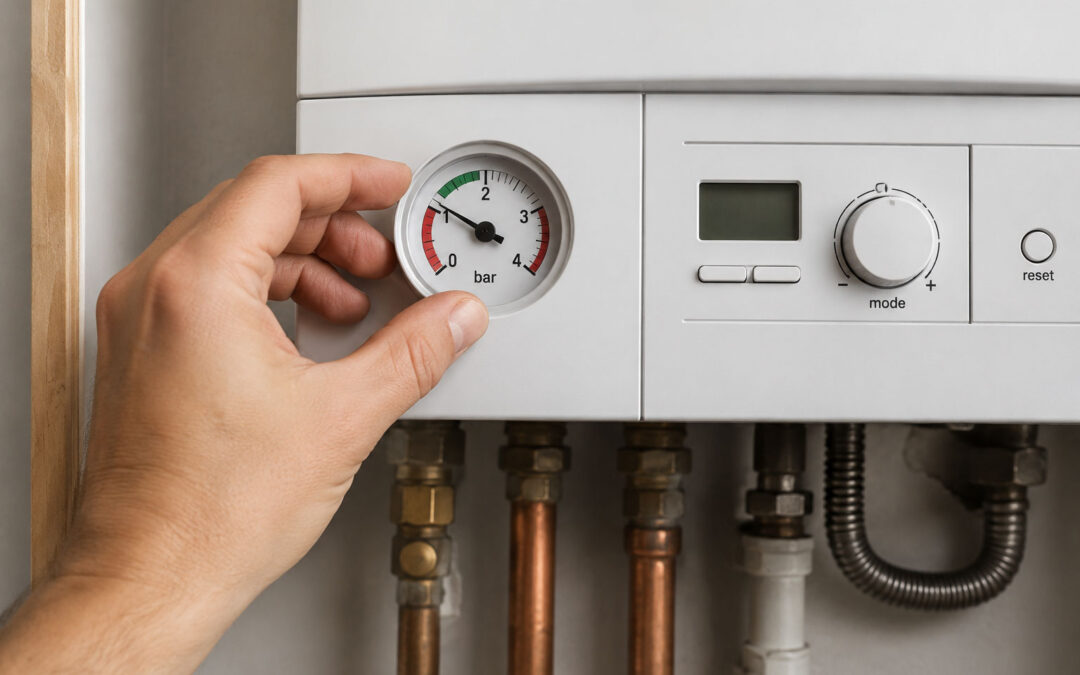
Most modern boilers operate best when the pressure gauge reads between 1.0 and 1.5 bar when the system is cold. When the heating is on, the pressure will usually rise slightly, which is perfectly normal.
If the pressure regularly falls below around 1 bar, your boiler may stop working correctly or display a fault code.
Common Reasons Boiler Pressure Keeps Dropping
A Small Leak Somewhere in the Heating System
Even a tiny leak from a radiator valve, pipe joint or under-floor pipework can gradually reduce system pressure.
Signs to look for include:
- Damp patches around pipework
- Water beneath radiators
- Staining on ceilings or walls
- Green or white deposits around fittings
Small leaks can often go unnoticed for some time.
A Faulty Pressure Relief Valve
The pressure relief valve is designed to release water if the pressure becomes too high.
If the valve develops a fault or fails to seal correctly afterwards, it may allow small amounts of water to escape continuously, causing the pressure to fall over time.
Expansion Vessel Problems
Most sealed heating systems include an expansion vessel that allows water to expand safely as it heats up.
If the vessel loses its air charge or develops a fault, the pressure may fluctuate significantly, often rising too high when the heating is on before dropping again once the system cools.
Recently Bled Radiators
Removing trapped air from radiators improves heating performance, but it also reduces the amount of water in the system.
After bleeding radiators, it’s normal to top the pressure back up using the filling loop if required.
Boiler Components Developing a Fault
Occasionally, internal components such as seals or the heat exchanger can develop faults that result in pressure loss.
These issues should always be investigated by a Gas Safe registered engineer.
Can I Keep Topping Up the Pressure?
Repeatedly topping up the boiler is not recommended.
Although restoring the pressure may get the heating working again, it doesn’t solve the underlying problem. Continually adding fresh water into the heating system can also increase corrosion within the pipework and radiators over time.
If the pressure drops regularly, it’s best to identify the cause rather than continually repressurising the system.
When Should You Call an Engineer?
Arrange a boiler inspection if:
- The pressure drops every few days.
- You can see water leaking from the boiler or heating system.
- The pressure relief pipe is dripping outside.
- The boiler repeatedly displays low-pressure fault codes.
- You have topped the system up several times without resolving the problem.
An engineer can determine whether the issue is a simple repair or whether another component requires replacement.
Can Boiler Servicing Help?
An annual boiler service allows many potential issues to be identified before they develop into larger problems.
During a service, your engineer can inspect the heating system, check operating pressures and identify signs of wear that may lead to pressure loss in the future.
Boiler Pressure Problems in York
If your boiler pressure keeps dropping, Simtec Heating can inspect your heating system, identify the cause and recommend the most appropriate solution.
Whether the problem is a small leak, an expansion vessel fault or another heating system issue, our Gas Safe registered engineers provide straightforward advice and practical repairs across York and the surrounding area.
If your boiler has developed a fault, you may also find our Boiler Repairs in York page helpful. Regular Boiler Servicing in York can also help identify issues before they become more serious.